Landing Pages Are Sales Funnels Don’t Over think It

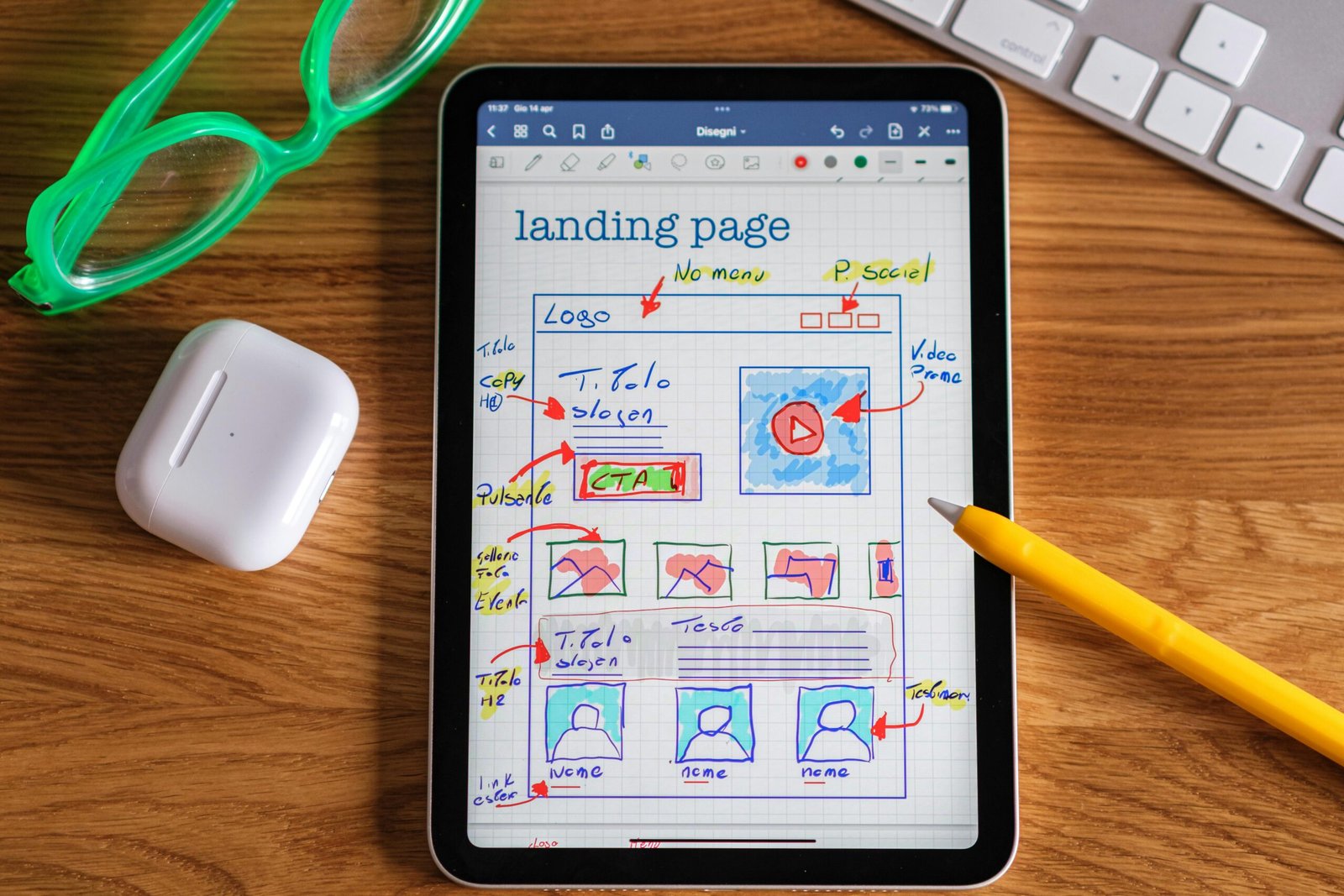
In digital marketing, the term “landing page” often conjures images of complex design, intricate A/B testing matrices, and a bewildering array of conversion optimization techniques. However, at its fundamental core, a landing page is simply a sales funnel. Its sole purpose is to guide a visitor from initial interest to a desired action, much like a physical sales associate leads a potential customer through a sales process. Dispelling the myth of unnecessary complexity is crucial for effective implementation and maximizing return on investment.
The Sales Funnel Analogy
Consider a traditional brick-and-mortar retail store. A customer enters (top of the funnel), browses products (middle of the funnel), engages with a sales associate (further down the funnel), and ultimately makes a purchase (bottom of the funnel). Each stage is designed to filter out unqualified leads and nurture interested prospects. A landing page operates on precisely the same principle, albeit in a digital environment.
- Awareness Stage (Top of the Funnel): This is where a user first encounters your offer, often through an advertisement, search result, or social media post. The landing page acts as the initial “storefront” that piques their interest enough to click through.
- Interest/Consideration Stage (Middle of the Funnel): Once on the landing page, the content is designed to educate, inform, and demonstrate value. It aims to answer initial questions, address pain points, and build desire for the proposed solution.
- Decision Stage (Bottom of the Funnel): At this point, the user is evaluating the offer more critically. The landing page highlights benefits, provides social proof, and directly addresses objections, ultimately prompting a conversion.
- Action Stage (Conversion): This is the desired outcome – a purchase, a sign-up, a download, or any quantifiable conversion metric. The landing page is specifically engineered to facilitate this final step.
The Singular Focus of a Landing Page
Unlike a general website with multiple navigation options and diverse content, a landing page adheres to a strict principle of focus. Its objective is singular: to drive a specific conversion. Any element that distracts from this primary goal compromises its effectiveness as a sales funnel.
- Elimination of Distractions: Traditional website navigation menus are often absent from effective landing pages. Social media icons, tangential blog posts, and internal search bars, while valuable on a broader website, serve as exits on a landing page. The goal is to keep the user metaphorically “on the path” towards conversion.
- Streamlined Information Delivery: Content on a landing page is concise, directly relevant to the offer, and strategically placed. Every word, image, and video should contribute to the sales message, elucidating value and addressing potential reservations.
In the realm of digital marketing, understanding the nuances of landing pages and sales funnels is crucial for driving conversions. A related article that delves into the importance of user-friendly design in online tools is available at Hostinger Horizons: Best No-Code App Builder. This piece explores how no-code app builders can streamline the process of creating effective landing pages, further emphasizing the idea that simplicity and clarity are key to successful sales funnels.
Deconstructing the Conversion Journey
Understanding the psychological journey a user undertakes on a landing page is paramount to its design and content strategy. This journey mirrors the stages of a sales conversation, albeit compressed and digitally mediated.
The Headline as the Sales Hook
The headline is the initial “elevator pitch” of your landing page. It is the first sales message a user encounters and carries the significant responsibility of capturing attention and communicating immediate value.
- Clarity and Specificity: Effective headlines are clear about the offer and benefits. Vague or overly clever headlines often fail to resonate. For example, “Get Organized” is less effective than “Streamline Your Workflow: Save 10 Hours Weekly with Our Project Management Tool.”
- Benefit-Oriented Language: Focus on what the user gains rather than what your product/service does. Emphasize solutions to pain points or aspirational outcomes.
- AIDA Principle in Action: The headline often embodies the “Attention” phase of the AIDA (Attention, Interest, Desire, Action) marketing framework, drawing the user further into the page.
The Body Copy as the Sales Pitch
The body copy of a landing page functions as the extended sales pitch, systematically addressing user needs, showcasing features, and building a compelling case for the offer.
- Problem-Solution Framework: A common and effective approach is to identify a prevalent problem your target audience faces and then position your offer as the optimal solution. This resonates with the user’s immediate concerns.
- Feature-Benefit Translation: Instead of merely listing features, translate them into tangible benefits for the user. A feature like “cloud storage” becomes a benefit like “access your files from anywhere, anytime, securely.”
- Addressing Objections Proactively: Anticipate common user objections and address them within the copy. This can involve highlighting guarantees, providing testimonials, or explaining pricing models transparently.
Visual Elements as Supporting Sales Aids
Images, videos, and infographics are not merely decorative elements on a landing page; they serve as critical sales aids, enhancing comprehension, building trust, and reinforcing the sales message.
- Relevance and Quality: Visuals should be directly relevant to the offer and of high professional quality. Poor imagery can erode credibility.
- Demonstrating Value Visually: Product demonstrations, user interface screenshots, or case study videos can communicate complex information more effectively than text alone.
- Building Emotional Connection: High-quality imagery can evoke emotions that resonate with the user and strengthen their connection to the brand and offer.
The Call to Action (CTA) as the Closing Statement

The Call to Action (CTA) is the explicit instruction guiding the user to the desired conversion. It represents the “closing statement” of your digital sales associate, clearly articulating what the user should do next.
Clarity and Urgency in the CTA
An effective CTA is unambiguous and, where appropriate, imbues a sense of urgency to encourage immediate action.
- Action-Oriented Language: Use strong verbs that clearly indicate the desired action, such as “Download Now,” “Get Your Free Trial,” “Shop Deals,” or “Claim Your Discount.”
- Benefit-Driven Wording: Sometimes, incorporating a benefit directly into the CTA can improve conversion rates, e.g., “Start Saving Today” instead of just “Sign Up.”
- Visual Prominence: The CTA button should be visually distinct from the rest of the page, using contrasting colors and ample white space to draw attention.
Placement and Repetition of CTAs
Strategic placement of CTAs throughout the landing page ensures that users are always presented with an opportunity to convert when they are ready.
- Above the Fold: An initial CTA should be visible without scrolling, catering to users who are immediately convinced or have limited time.
- Throughout the Content: As users consume more information and become more invested, strategically placed CTAs within the body copy provide conversion opportunities at various points of engagement.
- Bottom of the Page: A concluding CTA acts as a final prompt after the entire sales message has been delivered.
The Importance of Trust and Credibility

Just as trust is paramount in a face-to-face sales interaction, it is equally critical on a landing page. Building credibility can differentiate your offer and significantly influence conversion rates.
Social Proof as a Trust Multiplier
Social proof, in its various forms, acts as a powerful endorsement, signaling to potential customers that others have found value in your offer.
- Testimonials and Reviews: Authentic testimonials from satisfied customers, particularly those that address specific pain points or highlight positive outcomes, are highly persuasive. Video testimonials can be particularly impactful.
- Client Logos and Case Studies: Displaying logos of well-known clients or detailing successful case studies lends immediate authority and demonstrates proven results.
- Number of Users/Customers: Quantifying the number of people who have already benefited from your offer (e.g., “Trusted by 10,000 Businesses”) provides social validation.
Security and Privacy Assurances
In an era of increasing data awareness, explicitly addressing security and privacy concerns can alleviate potential hesitation from users.
- Security Badges: Displaying trust badges from reputable security providers (e.g., SSL certificates, payment gateway logos) assures users their data is protected.
- Privacy Policy Link: A clearly accessible link to your privacy policy demonstrates transparency and adherence to data protection regulations.
- Guarantees and Warranties: Offering money-back guarantees or product warranties reduces perceived risk and builds confidence in the offer.
In the realm of digital marketing, understanding the nuances of landing pages as effective sales funnels is crucial for driving conversions. For those looking to enhance their marketing strategies, exploring innovative ideas can be incredibly beneficial. By integrating these ideas, marketers can create more engaging and persuasive experiences for their audience.
Post-Conversion Nurturing and Optimization
The role of a landing page as a sales funnel doesn’t end with a conversion. The follow-up strategy is crucial for retaining customers and maximizing long-term value. Furthermore, continuous optimization is essential for refining the funnel’s efficiency.
Thank You Pages and Next Steps
The “thank you” page is more than just an acknowledgment; it’s an opportunity to reinforce the positive experience and guide the user to their next interaction.
- Confirmation of Action: Clearly confirm that the desired action has been successfully completed.
- Delivery of Value: If applicable, provide immediate access to the promised resource (e.g., download link, access to content).
- Next Steps and Further Engagement: Suggest related content, invite them to social media, or introduce them to other relevant offers, keeping them within your brand ecosystem.
Analytics and Continuous Improvement
Treating your landing page as a sales funnel necessitates a data-driven approach to identify bottlenecks and opportunities for improvement.
- Key Performance Indicators (KPIs): Monitor conversion rates, bounce rates, time on page, and click-through rates on specific elements. These metrics reveal where users are dropping off or engaging most effectively.
- A/B Testing: Experiment with different headlines, body copy, visual elements, CTA wording, and page layouts. Even minor tweaks can significantly impact conversion rates. This iterative process is fundamental to optimizing a sales funnel.
- User Feedback: Solicit direct feedback through surveys, heatmaps, or user session recordings to gain qualitative insights into user experience and identify areas for enhancement.
In conclusion, approaching a landing page with the mindset of a sales funnel simplifies the design and optimization process. By focusing on guiding users through a structured journey from awareness to action, and continuously refining that journey based on data, you can significantly enhance conversion rates and achieve your marketing objectives. It’s not about overthinking the technology or design; it’s about understanding the timeless principles of effective salesmanship applied to a digital medium.
All Time Best Landing Page Builder
FAQs
What is a landing page in the context of sales funnels?
A landing page is a standalone web page designed specifically to capture a visitor’s attention and encourage a specific action, such as making a purchase or signing up for a newsletter. It serves as the entry point in a sales funnel, guiding visitors toward conversion.
How do landing pages function as sales funnels?
Landing pages function as sales funnels by directing visitors through a focused, step-by-step process that leads to a desired outcome. They eliminate distractions, present clear calls to action, and often include persuasive elements like testimonials or offers to convert visitors into customers.
Why is it important not to overthink landing page design?
Overthinking landing page design can lead to unnecessary complexity, which may confuse visitors and reduce conversion rates. Keeping the design simple, clear, and focused on the primary goal helps maintain visitor attention and improves the effectiveness of the sales funnel.
What are key elements to include on an effective landing page?
Key elements of an effective landing page include a compelling headline, concise and persuasive copy, a clear call to action, relevant images or videos, and social proof such as testimonials or reviews. These components work together to guide visitors toward conversion.
Can a landing page be used for different stages of a sales funnel?
Yes, landing pages can be tailored for different stages of a sales funnel, such as awareness, consideration, or decision. Each landing page should be designed to address the specific needs and questions of visitors at that stage, helping to move them closer to making a purchase or taking the desired action.